These programs are free. We don’t ask you to pay for these invaluable webinars, instead, we hope that you’ll make a donation of any size to your local food bank! Thank you in advance for your generosity.
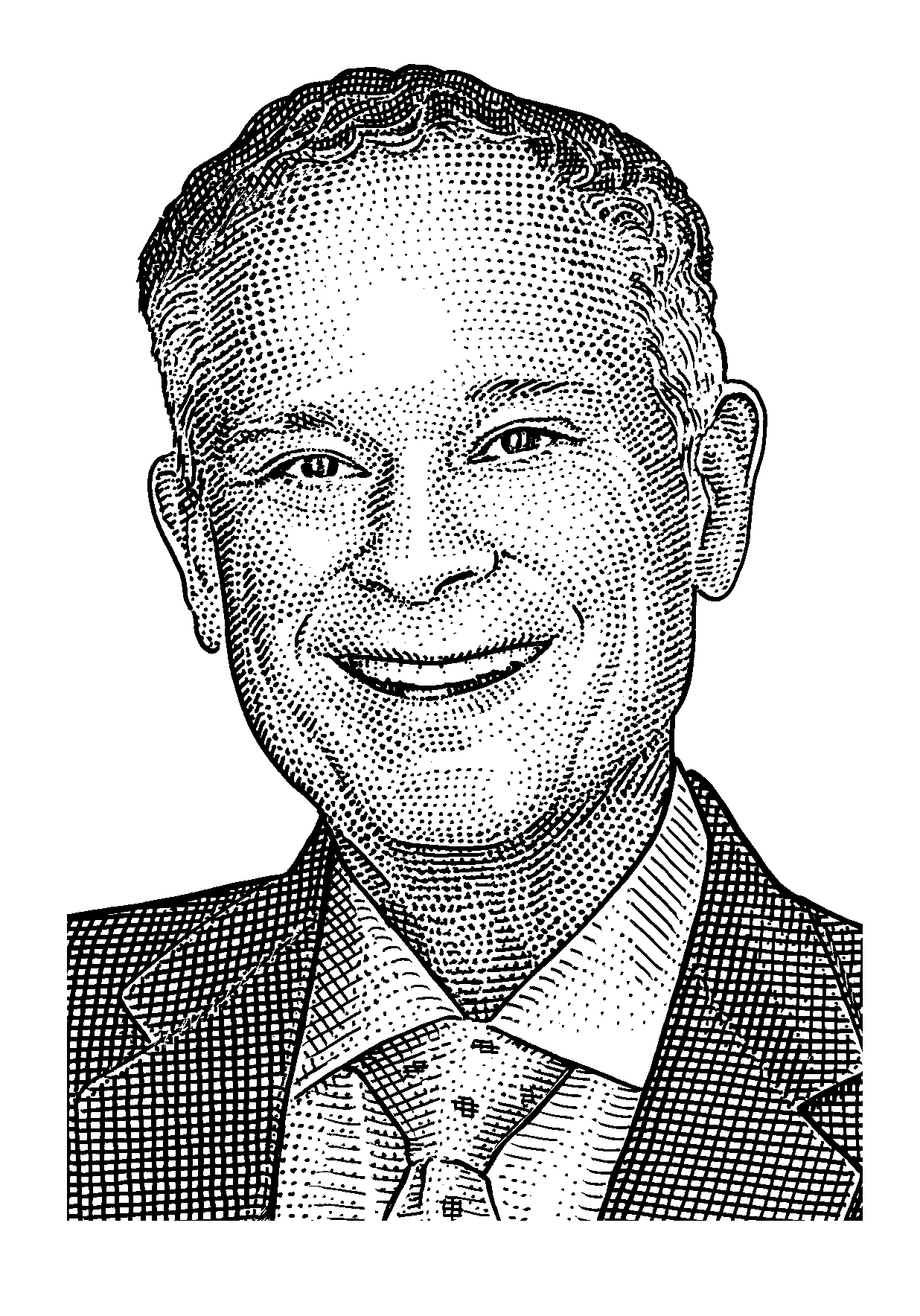
Our special guest this week, David Hoffman, Founder, Boston Law Collaborative, LLC and John H. Watson, Jr. Lecturer on Law at Harvard Law School gave this fantastic presentation on The Art of Impasse-Breaking in Mediation.
Mediators use a wide variety of tools to break impasses, ranging from reality testing and risk analysis to range bargaining and double-blind mediator’s proposals. As a long-time mediator who teaches mediation to law students and trains mediators for the Program on Negotiation at Harvard Law School, David Hoffman has collected a toolbox full of techniques, which he will share in this presentation. (David’s ideas on impasse-breaking will also be published by the ABA later this year in a book with the same title as this presentation.) Please join us and share your tools too.
The Will Work For Food programs are educational webinars that are presented primarily by and for attorneys, mediators and arbitrators. Each Thursday, at 8am Pacific, an amazing colleague joins us to give a webinar presentation about a timely topic. Please join us!
Briefing Document
Briefing: The Art of Impasse Breaking in Mediation with Prof. David Hoffman
Overview
This briefing summarizes key insights and techniques for breaking impasses in mediation, as presented by David Hoffman, a leading mediator, attorney, arbitrator, and founder of Boston Law Collaborative, LLC. The information is drawn from a “Will Work For Food” webinar, recorded on July 24th, 2025, and a companion document. Hoffman, a prolific author and Harvard Law School lecturer, shares a comprehensive “toolbox” of strategies, many of which will be featured in his upcoming book, “The Art of Impasse-Breaking in Mediation.”
1. The “Will Work For Food” Project and Philanthropy
The webinar is part of the “Will Work For Food” project, founded by Natalie Armstrong-Motin, which hosts weekly webinars for legal professionals. There is no charge for attendance, but participants are encouraged to contribute to a food bank. As of July 24th, 2025, the project had raised $844,873.24, with a goal of reaching one million dollars by year-end.
David Hoffman specifically advocates for donations to the Greater Boston Food Bank, highlighting its significant impact. In the previous year, this organization distributed over 107 million pounds of food, providing nearly 90 million meals. Hoffman and his firm, Boston Law Collaborative, actively support the Greater Boston Food Bank through volunteering (sorting food) and fundraising events like the Boston Marathon and a related program, Project Bread’s Walk for Hunger.
2. David Hoffman: Credentials and Background
David Hoffman is a highly accomplished and respected figure in the field of dispute resolution:
Current Roles: John H. Watson, Jr. Lecturer on Law at Harvard Law School (teaching mediation, diversity and dispute resolution, and collaborative law); attorney, mediator, arbitrator, and founding member of Boston Law Collaborative, LLC.
Experience: Mediated or arbitrated approximately 2,000 cases since 1991, specializing in family, business, employment, and other disputes.
Prior Experience: Litigation partner at Hill & Barlow for 17 years before founding BLC in 2003.
Leadership & Recognition: Past chair of the ABA Section of Dispute Resolution; Distinguished Fellow of the International Academy of Mediators; recipient of Lifetime Achievement Awards from the American College of Civil Trial Mediators and the Academy of Professional Family Mediators.
Publications: Authored three books (including “Bringing Peace into the Room”) and over 100 articles and book chapters. His new book, “The Art of Impasse-Breaking in Mediation,” will be published by the American Bar Association later in 2025.
Education: Bachelor’s from Princeton, Master’s in American Studies from Cornell, JD from Harvard (where he was an editor of the Harvard Law Review and research assistant for Prof. Laurence Tribe). He also clerked for Hon. Stephen G. Breyer on the U.S. Court of Appeals for the First Circuit.
Personal: Lives in a cohousing community in Acton, Massachusetts, with his wife. He hiked the Appalachian Trail in 2000 with his son and has a rescued golden retriever named Bella.
3. The Core Premise: Diagnosing Settlement Barriers
Hoffman begins by establishing the context for impasse breaking: parties are “really stuck” even after all the mediation basics have been covered (hearing accounts, exploring feelings, eliciting interests, brainstorming options, and considering BATNA/MLATNA). His primary advice at this point is to “diagnose the settlement barriers.”
Common barriers include:
Missing Information: Parties may lack crucial data, like tax credit details in a business valuation.
Missing People: Critical individuals (e.g., a key management employee in a business, a family member in a marital dispute) whose input or presence is essential for resolution.
Need to Change the Players: When primary negotiators are at loggerheads, bringing in different individuals (e.g., experts who respect each other, junior lawyers who get along) can facilitate progress.
Lack of Momentum: The absence of small agreements can keep parties stuck.
Hoffman provides a diverse range of techniques, emphasizing that “mediation is more art than science.”
A. Process Interventions
Bella, the Golden Retriever: Hoffman sometimes brings his rescued golden retriever, Bella, to mediations. Bella is a “very special member of the Boston Law Collaborative team” and “always willing to work probono.” She acts as a “conflict mediator,” helping parties “let their guard down” and fostering a relational connection, as “even if the parties can’t stand each other they all love Bella.”
Partial Agreements: Achieving interim agreements, even small ones, can create crucial “momentum.”
Other ADR Processes: As “process experts,” mediators can triage parts of a case to other dispute resolution methods like arbitration, case evaluation, or even limited litigation if a legal precedent is needed.
Narrative/Storytelling: Going back to hear the parties’ full stories, especially their emotional impact, can be deeply meaningful. Hoffman intentionally dedicates the first caucus round to hearing stories, not numbers. He notes, “you can’t disagree with a narrative. It is what it is. And sometimes narratives have a way of opening up people’s hearts… and helping them demonstrate some vulnerability that breaks through the log jam.”
Reminding of Common Interests & Opportunity for Trades: Highlighting shared goals (e.g., reducing transaction costs, publicity risk, time imposition) and leveraging differing interests (e.g., payment timelines vs. security). Differing interests can be useful – less of a bug and more of a feature.”
Metaphor: Using illustrative metaphors to reframe perspectives. Examples include:
Rearview Mirror & Windshield: “our goal is to… move forward.” While the past is acknowledged, the focus is on the future. “That’s all we have to agree on.”
Whitewater Rafting: Acknowledging that mediation can be “choppy,” but “if everyone stays in the boat and they don’t hit each other with the paddles we’ll hit some calmer water and we’ll get to our destination.”
Parents as Co-pilots: In family cases with children, parents need to “shut the door to the cockpit so the kids who are the passengers are not listening in on your conversation,” and agree on the destination.
Food: Sharing a meal can help parties “let their guard down a little bit,” fostering “caring and connection.”
Silence: Allowing moments of silence, especially after profound statements, can be powerful. “Mahatma Gandhi said speak only when it improves upon the silence.”
Taking a Break: Providing distraction or a change of scenery can help. However, mediators must “recognize that sometimes taking a break can result in losing momentum.”
Role Reversal: Asking parties to articulate the other person’s concerns “as if they were the other person.” This is a “risky step” but “very powerful” when used.
Apology: Facilitating apologies, especially mutual ones. Hoffman asks parties, “if you could roll back the videotape of what happened, is there something you would do differently if you could,” finding that “nine times out of 10 the parties can think of something.” If both sides are willing to express this, it “often leads to an apology.” Caution is advised regarding power dynamics.
Acknowledgement: Mediators acting as “cheerleaders” by appreciating parties’ candor, focus, and willingness to engage.
Case Evaluation: While less frequently requested, Hoffman uses decision tree software (e.g., TreeAge.com) or encourages parties to do their own. He often recommends a retired judge for a non-binding opinion, sometimes even obtaining three opinions to “avoid the risk of an aberrant… opinion.”
Hypothetical Proposals: In shuttle diplomacy, posing the following question, “if I can get the other side to ‘X,’ would you go there?” Sometimes the party will say ‘no,’ but we could do ‘Y’ and now the bookends are closer.
Confidential Last Best Offer (Judge Tauro’s Method): Parties secretly write their “no BS number.” The mediator reviews them and advises whether settlement is likely or a trial date is needed. This often prompts parties to reveal their numbers to each other, moving “the book ends… much closer.”
Mediator’s Proposal (Double Blind): A prediction of what the parties might do, not what a court will do (like case evaluation).
— Ground Rules: All parties must want the proposal; mediator discusses all terms (including ancillary issues like tax treatment, confidentiality); mediator makes the same proposal in separate caucuses; parties do not respond immediately; mediator reports responses only if all parties accept. This allows each party to say “yes” without the other side knowing unless they also said “yes.”
— Process: The mediator identifies a “crossover point” where moving the number up or down would reduce the chance of settlement, often using intuition and data (e.g., plaintiffs typically move $2 for every $1 a defendant moves).
— Controversy: Hoffman acknowledges a debate in the field about whether repeat players strategically “obfuscate their real reserve price” to influence the proposal. He has not personally found this to be the case, but respects the viewpoint.
Reminding the Parties that Mediation is Voluntary: A “paradoxical intervention” to assess parties’ motivation for continuing.
B. Substantive Interventions
Range Bargaining (Bracketed Bargaining): Parties propose ranges (e.g., “we’ll pay X if you come down to Y”). This helps identify the Zone of Possible Agreement (ZOPA) and can engender hope when midpoints of ranges converge. Hoffman provides a detailed case example illustrating the back-and-forth nature of this technique.
Contingencies: Addressing future uncertainties by building conditions into the agreement. Examples include earn-outs in corporate transactions, clawbacks in employment cases, indemnification, tax sharing, inspections, financing, rights of first refusal, and profit-sharing arrangements.
Dual or Multiple Offers: Presenting an initial proposal along with an alternative (e.g., “here’s our offer, or we’re willing to submit to non-binding case evaluation”). This can make an offer seem less extreme because the offerer is showing that they have the courage of their convictions.
Auctions: When multiple parties want the same asset (real estate, business), auctions can resolve the issue.
— Internal Auction: Only the parties bid, with agreed-upon time intervals and bid increments.
— External Auction: Exposing the asset to the public market to establish fair market value, but it can drive up the price, favoring the seller.
— Adjusted Winner Auction: For multiple items (e.g., divorce). Each party privately assigns a value to each item. The item goes to the higher bidder at a price that’s the average of the two bids, creating a “bargain” for the buyer and a “premium” for the seller.
— Joint Experts/Appraisals (Three-Step Process):
1. Parties jointly hire a first appraiser for a non-binding opinion, then negotiate; Then,
2. If no agreement, jointly hire a second appraiser for a non-binding opinion, then negotiate.
3. Again if no agreement, jointly hire a third appraiser. The average of all three appraisals is binding. A safeguard: if any appraisal is >15% different from the average of the other two, it’s rejected as an outlier. This often leads to settlement before the third step because parties are “uncomfortable with the idea of being bound.”
5. Challenges and Impasse Prevention
“Principle” vs. “Money”: Hoffman notes that parties often articulate issues as “principle,” even when it appears to be about money. He emphasizes honoring this human need to “stick up for fairness and reciprocity,” citing the ultimatum game as an example of people rejecting free money if they feel unfairly treated.
Extreme Offers (“Spiral of Doom”): Hoffman warns against extreme demands or offers that can elicit equally extreme responses, creating a “spiral of doom.” Mediators should “reason with people about what the expected response might be to their proposal and intervene to prevent such offers from “killing the mediation.”
6. Impasse Prevention Technique: Internal Family Systems (IFS) Model
Hoffman highlights the Internal Family Systems (IFS) Model, developed by Dr. Richard Schwarz, as a valuable psychological model for understanding human behavior and preventing impasses.
Core Concept: Everyone has “parts” that are in constant internal negotiation (e.g., one part wanting to resolve, another wanting to avoid being taken advantage of).
Application in Mediation: Understanding these internal dynamics can help conflict resolvers. Hoffman provides links to articles and videos on IFS for mediators and lawyers, and mentions a six-week workshop offered by the IFS Institute. IFS is an “evidence-based method of psychotherapy equal in effectiveness to cognitive behavioral therapy,” and can be useful for mediators.
7. Q&A Highlights
Mediator’s Proposal – Lawyer Buy-in: Jeff, one of the hosts, asks if Hoffman seeks lawyer buy-in before crafting a mediator’s proposal, noting his own success when lawyers grudgingly agree to recommend it. Hoffman, however, expresses “trepidation,” fearing lawyers might reveal their “bottom line” prematurely, which he avoids knowing to prevent parties from feeling “painted into a corner” or losing face. He acknowledges Jeff’s different approach as a potential “tool in my toolbox.”
Zoom Mediation: Hoffman notes that Zoom allows for cases with parties in different locations, which was previously too expensive. While he misses peripheral vision and Bella’s in-person impact, he finds Zoom beneficial for cases with power imbalances, where one party might feel intimidated by the physical presence of the other party. He believes Zoom has not reduced the ability of mediators to break impasses.
David A. Hoffman is a mediator, arbitrator, and Collaborative Law attorney at Boston Law Collaborative, LLC. He is past chair of the ABA Section of Dispute Resolution. He is the John H. Watson, Jr. Lecturer on Law at Harvard Law School, where he teaches courses on Mediation, Collaborative Law, and… MORE >
Jeff Kichaven is one of America’s leading mediators. He’s “Ranked in Chambers – Band 1” on the USA – Nationwide list, and Lexology (f/k/a Who’s Who Legal) has honored him as a Global Elite Thought Leader in mediation. Jeff is an Honors Graduate of Harvard Law School and a Phi… MORE >
Natalie J. Armstrong Motin is a Mediation Business Strategist | ADR Practice Development Consultant | Social Media Marketing Management for mediators and arbitrators around the world. She is the founder of Will Work For Food, host of the Idle Chat video series for the ABA's Section for Dispute Resolution, and… MORE >
I help Attorneys and Parties simplify and resolve Complex Insurance, Civil & Commercial Litigation, Professional Liability, ADA and Cyber/Privacy Litigation by finding SOLUTIONS that bring RESOLUTION and CLOSURE so that the Parties can get on with their businesses and lives unencumbered by the uncertainties, risks and expense of litigation. I… MORE >
Negotiator, Litigator and Mediator Specializing in Entertainment, Intellectual Property, and Media Matters David Shraga brings legal sophistication, sound business judgment, and executive experience to every dispute he handles.= He’s led legal and business affairs at premiere global studios, overseen countless negotiations and productions, and advised some of the world’s most… MORE >
In this episode of the ICODR podcast, Ian interviews Colin Rule, CEO of mediate.com, arbitrate.com, and odr.com. In 2011 Colin co-founded Modria, an ODR provider based in Silicon Valley, which was acquired by Tyler...
The ADR Institute of Canada has an Online Dispute Task Force (ODRTF). The Task Force formed a sub-committee on Platforms. ODR "platforms" are those dispute resolution programs that offer the...
Lisa Parkinson describes how family mediation came about in the UK. Divorce rates were on the rise and research was revealing the harmful effects parental conflict had on children. The...
To provide the best experiences, we use technologies like cookies to store and/or access device information. Consenting to these technologies will allow us to process data such as browsing behavior or unique IDs on this site. Not consenting or withdrawing consent, may adversely affect certain features and functions.
Functional
Always active
The technical storage or access is strictly necessary for the legitimate purpose of enabling the use of a specific service explicitly requested by the subscriber or user, or for the sole purpose of carrying out the transmission of a communication over an electronic communications network.
Preferences
The technical storage or access is necessary for the legitimate purpose of storing preferences that are not requested by the subscriber or user.
Statistics
The technical storage or access that is used exclusively for statistical purposes.The technical storage or access that is used exclusively for anonymous statistical purposes. Without a subpoena, voluntary compliance on the part of your Internet Service Provider, or additional records from a third party, information stored or retrieved for this purpose alone cannot usually be used to identify you.
Marketing
The technical storage or access is required to create user profiles to send advertising, or to track the user on a website or across several websites for similar marketing purposes.