Business Conflict Blog by Peter Phillips
Every now and then this blog features judicial opinions that interpret mediation confidentiality in seemingly odd ways. The California Court of Appeals’ August 3, 2012, opinion in Hadley et al. v. The Cochran Firm deserves a place in the pantheon.
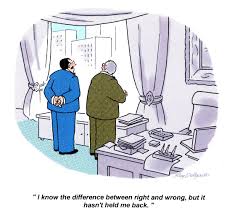
Plaintiffs sued their former attorneys, who had assisted them in asserting claims against their employer. Plaintiffs alleged that, in the course of a mediation held on July 26, 2008, the defendant attorneys had taken the executed signature page of a confidentiality agreement and stapled it to a purported settlement agreement and general release, thereby settling and dismissing their claims without their knowledge or authority. Plaintiffs alleged that they first learned that the claims had been dismissed when some of them visited their lawyer’s offices on July 31.
Defendants brought a motion in limine seeking to exclude evidence of the alleged fraud and malpractice on the ground that the actions, events and statements complained of “occurred at an underlying mediation,” and therefore were barred by operation of the Califonia mediation confidentiality statutes.
The trial court granted the motion and dismissed the claim. The Court of Appeals affirmed.
The appellate court considered that the confidentiality statutes at issue were broad, clear and absolute, barring introduction of evidence not only of statements and events occurring during the mediation, but those “for the purpose of… or pursuant to the mediation.” This bars even statements that were made by a client to her own attorney, the privilege as to which the client has waived.
“Therefore, communications between a client and his or her attorney are covered by the confidentiality provisions, even if their application would preclude a client from seeking redress for attorney malpractice.”
Mediation is sheathed in confidentiality in order to encourage candor in negotiation and, by extension, to promote the voluntary resolution of civil claims. But this ruling would make any client shiver at the thought of entering a mediation room; you could end up with a wet ear and no one would ever learn whodunit!
In Oliver Twist, Mr. Bumble is confronted with the law’s supposition that Mrs. Bumble acts at her husband’s direction. “If the law supposes that, the law is a ass — a idiot,” Bumble replies. I would not go so far. But The Cochran Firm certainly has taught teach us how to get our clients to quickly settle those pesky claims, yes?

Many organizations seem to have a strong avoiding culture, which can best be investigated with a specific change in TKI instructions. Instead of asking members to respond to the thirty items in...
By Ralph KilmannIn the U.S., thousands of graduate school applicants sit each year for one or more of the standardized tests that most universities require as part of their admissions process. One...
By Diane J. LevinKalamazoo Divorce Lawyer Blog by Jeff MurphyMost of us who are trained mediators learned the process of “Principled Negotiation”. It’s the theory behind Roger Fisher and William Ury’s Great work...
By Jeff Murphy