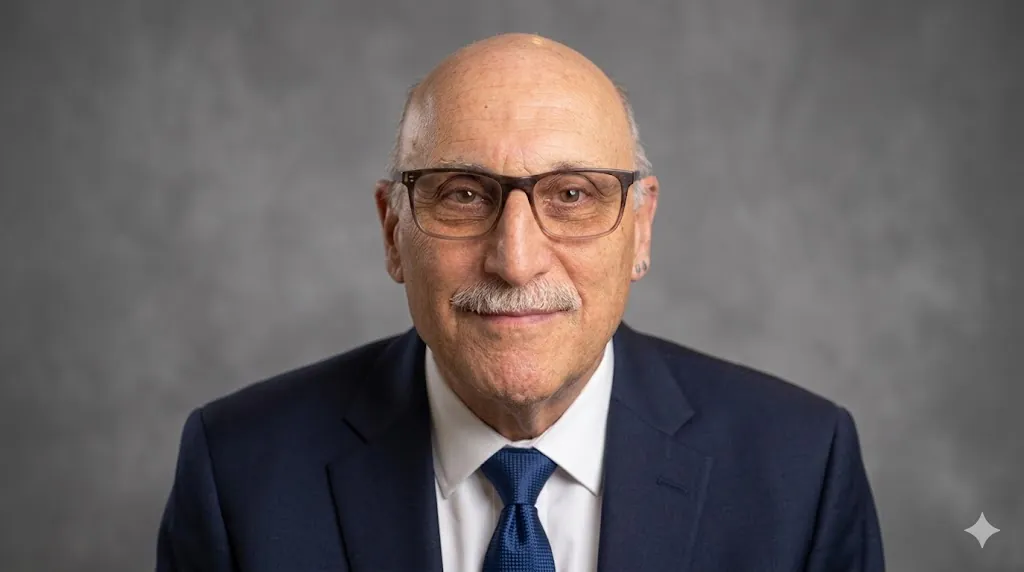
In a recent New York Law Journal article, John Siffert and co-author Nelson Timken propose that litigators start to view mediation as another weapon in their arsenal to resolve litigated cases. Often mediations fail because litigators do not seize the opportunity to create an environment that makes it possible to achieve the client’s goal short of “winning” the case.
Virtually every state and federal court in New York now requires civil cases to be mediated. The expansion of court-mandated mediations has meant that litigators need to pivot from zealous trial advocates to counselors capable of recognizing when the client is best served by settling the dispute. This entails learning new skills and approaches to problem solving and, embracing a mindset that is open to resolving cases outside of the courtroom.
The authors suggest that litigators have a duty as officers of the court to embrace mediation because courts depend upon mediation programs to keep their dockets current. They explain how mediation has worked in a variety of situations and how those techniques can be applied to litigated cases.
This article is part of an initiative of the New York City Bar Association Alternative Dispute Resolution Committee to encourage mediation advocacy, with a panel discussion on the topic in December 2025.
Commentary: Mastering Mediation Advocacy: Essential Skills for the Modern Litigator (Published in New York Law Journal July 24,2025 pages 8-9)
Fifty years ago, the Court of Appeals Mediation Program (CAMP) began what has become a foundational shift in how disputes are resolved. As Judge Raymond Lohier of the U.S. Court of Appeals for the Second Circuit succinctly observed on CAMP’s half-century mark, judges and mediators share a common purpose: resolving cases. This deceptively simple statement underscores a profound truth: mediation, particularly court ordered mediation, is no longer an ancillary exercise but a cornerstone of our justice system. It is here to stay, and for lawyers, mastering its unique demands is paramount to effective client advocacy.
Elevating Mediation Advocacy: The City Bar ADR Committee Initiative
Recognizing this critical need to train lawyers for mediation, the Alternative Dispute Resolution (ADR)Committee of the New York City Bar Association, chaired by Susan Salazar, established an initiative to equip attorneys with the necessary skills, ethical understanding, and practical knowledge to effectively represent their clients’ interests within the mediation process, ultimately promoting efficient and fair dispute resolution. In support of this objective, it established a subcommittee dedicated to enhancing lawyers’ effectiveness in court administered mediations. This subcommittee is planning a December program to address how lawyers can best help their clients achieve mediated resolutions that serve their interests. The subcommittee’s mission is to secure “buy-in” from experienced litigators regarding mediation’s legitimacy as a bona fide dispute resolution method.
While formal training for litigators in court-mandated mediation has been limited, a growing body of literature and practical wisdom is readily available. Scholars have identified successful mediation strategies and techniques applied across diverse political and business contexts (Christopher W. Moore, “The Mediation Process: Practical Strategies for Resolving Conflict” (4th ed. 2014)). Litigators can also gain invaluable insights from experienced mediators who have served for years on federal and state court panels, many with decades of private mediation experience with organizations like the American Arbitration Association, CPR, and the Chartered Institute.
Unlike court proceedings, mediations are largely party controlled. Participants decide on in-person or remote sessions, whether to engage in joint sessions or remain in separate caucus rooms, and how to handle pre-mediation statements—exchanging them with the other side or submitting them ex parte to the mediator for confidential review.
Beyond the Battlefield: Why Mediation Demands Different Legal Skills
Traditional legal training hones adversarial skills. Lawyers learn to litigate through mock arguments, jury addresses, and witness examinations, perfecting the art of non-concession, strategic surprise, and guarded questioning. Years of depositions, courtroom battles, and brief writing further burnish these abilities, with the ultimate goal of winning or minimizing loss. These “show of strength” tactics can be effective in direct settlement negotiations. However, mediation operates on a fundamentally different premise. Mediators are trained to facilitate resolution even when a clear “winner” isn’t apparent. Historically, litigators have received scant training or guidance in this distinct process. Effective representation in mediation is a teachable and essential skill. Lawyers who apply a purely litigation focused approach in mediation risk undermining the mediator’s efforts and hindering a resolution that could benefit all parties.
Some cynically suggest that litigators dislike mediation, purposefully sabotaging it to prolong lawsuits and accrue fees. This view disregards the profession’s foundational commitment to client service. Lawyers are bound by rigorous ethical rules, professional canons, and civility. A lawyer’s primary duty is to zealously advocate for clients, but always within the bounds of law and professional responsibility.
The Counselor’s Mantle: Shifting Mindsets for Success
When in “mediation mode,” litigators have many additional pathways to pursue. By embracing the role of “counselor,” lawyers are better positioned to help clients reach their own conclusions about what serves their best interests. This doesn’t mean abandoning the duty to advise clients on their rights, likelihood of success, or risks of pursuing claims (Gary G. Corum, “The Advocate’s Role in Mediation,” 4 Pepp. Disp. Resol. L.J. 209, 215–16 (2004)). Rather, viewing their role as a counselor allows lawyers to temporarily set aside the “sharpened tools of a zealous advocate,” enabling clients to explore their true desires and the value of achieving them (Robert C. Bordone & Michael Moffitt, “How Do Lawyers Negotiate? The Role of Zealous Advocacy,” 33 Harv. Negot. L. Rev. 1, 10-12 (2018)).
For this reason, some mediators encourage lawyers to help clients differentiate between “deal points” requiring monetary payment and those that can be satisfied through non-monetary “principles.” Sharpening the focus on the needed relief can be more effective than sharpening litigation tools (See generally Carrie J. Menkel-Meadow, “Mediating Solvable Problems: An Essay on the Art of Problem Solving,” 11 NEGO. & CONFLICT MGMT. RES. 11, 22-24 (2018)). This might involve drafting a client-facing statement that summarizes the adversary’s strongest arguments, how to overcome them, and a risk analysis for each. Setting realistic goals is key (Leonard L. Riskin & James E. Westbrook, “Dispute Resolution and Lawyers” 297–99 (3d ed. 2005)). Often, it’s worth reminding a client to “be careful what you wish for,” as the image of a dog catching a car comes to mind.
Because mediation is less formal than court proceedings, counsel may be permitted ex parte, premediation discussions with the mediator. These sessions offer opportunities to alert the mediator to anticipated problems and explore potential solutions (Dwight Golann, “Mediating Legal Disputes” 101 03 (3d ed. 2016)). While a realistic settlement plan is beneficial, it’s crucial not to be fixated on it and to remain open to unexpected pathways that may emerge (Robert H. Mnookin, Scott R. Peppet, & Andrew S. Tulumello, “Beyond Winning: Negotiating to Create Value in Deals and Disputes,” 141- 43 (2000))
Client-Centric Resolution: A Duty to Mediate in Good Faith
It is a lawyer’s professional duty to participate in mediations in good faith and help clients resolve disputes. Consider the multinational CEO who questioned why his counsel wasn’t advising mediation, given that over 95% of cases settle pretrial and his case wouldn’t see trial for years. An early resolution, he rightly asserted, would save untold resources, prevent corporate distraction, and mitigate substantial legal fees and costs.
The data unequivocally support this perspective. Court systems face rising caseloads and struggle with timely dispositions. New York state and federal courts have implemented robust alternative dispute resolution (ADR) procedures to address this challenge. Federal courts in New York, for instance, utilize mediation programs to manage pending civil lawsuits, enabling them to keep pace with new filings. Less than 2% of federal cases currently proceed to trial; the rest are dismissed, voluntarily discontinued, or settled. The 2022 Report of the Southern District of New York’s Mediation Services Committee notes that nearly 2/3 of referred cases were outside automatic mediation protocols, and approximately 65% of all mediated cases resolved successfully. The lawyers appearing in these mediations are the same litigators handling the cases in court. As court-administered mediations become more prevalent, mediators observe that many cases that should settle fail to resolve because some lawyers inadvertently or purposefully work at cross-purposes, disrupting the mediation’s momentum (See, e.g., Leonard L. Riskin, “Mediator Orientations, Strategies and Techniques,” 1 J. Disp. Resol. 7, 24–26 (1994)). For instance, where counsel for the plaintiff, perhaps overly confident in their trial position, consistently makes demands that were not only financially unrealistic but also non negotiable from the outset.
Rather than exploring underlying interests or potential creative solutions, the lawyer focuses exclusively on the maximum possible court award, even dismissing offers that genuinely represented a reasonable settlement range. This rigid adherence to an extreme position, coupled with a refusal to engage in the give-and-take inherent in mediation, effectively shuts down meaningful negotiation. The lawyer’s approach, whether stemming from a lack of mediation experience or a deliberate tactic to signal strength for trial, inadvertently signals to the opposing side that settlement is not a serious consideration, leading to an impasse despite the presence of common ground.
Preparing the Client: The Key to Productive Mediation
A lawyer’s role in mediation extends beyond legal strategy; it encompasses comprehensive client preparation. Many clients arrive at mediation with misconceptions, expecting a miniature trial or a quick, effortless resolution. Failing to properly prepare them can lead to frustration, unrealistic expectations, and ultimately, a breakdown in the mediation process. Effective client preparation involves:
By investing time in robust client preparation, lawyers not only empower their clients but also significantly increase the likelihood of achieving a beneficial and lasting mediated resolution.
Confidentiality: The Fuel That Powers Mediation
When emotional factors are present, assuring the client of mediation’s confidentiality can alleviate hesitation. Court-administered mediations typically offer stronger confidentiality protections than those existing in New York, which is not governed by the Uniform Mediation Act (John Lande, “The Confidentiality of Mediation Communications: A Guide for States,” 2003 J. Disp. Resol. 1, 3 (2003)).
Counsel must be aware of the specific court rules governing mediation conducted by their prequalified panels.
Equipping Lawyers for Effective Court-Administered Mediation
Numerous resources exist for lawyers seeking to enhance their effectiveness in court-administered mediation (See, e.g., J. H. Stark & D. N. Frenkel, “The Practice of Mediation: A Video-Integrated Text” (2d ed. 2012); Roger Fisher, William Ury, & Bruce Patton, “Getting to Yes: Negotiating Agreement Without Giving In” (3d ed. 2011)). The Southern District of New York Pro Bono Mediation Office, for example, offers a guide titled “Preparing for Mediation: A Resource for Advocates.” This step-by-step introduction to the Southern District’s Mediation program applies broadly to almost any mediation, regardless of court or private administration. It outlines essential preparation steps for both lawyers and their clients, including how to explain the process to clients.
Scholars have published studies of their findings about what mediation techniques contribute to mediation success. A rigorous analysis of Best Alternative to a Negotiated Agreement (BATNA) versus Worst Alternative to a Negotiated Agreement (WATNA) can be a powerful “reality check” for clients, illuminating the wisdom of a mediated resolution (Robert H. Mnookin, Scott R. Peppet, & Andrew S. Tulumello, “Beyond Winning: Negotiating to Create Value in Deals and Disputes” 19-21 (2000)).
Another key insight is encouraging cooperative rather than adversarial behavior, especially where longstanding or future relationships are at stake, allowing both sides to “win” (Roger Fisher, William Ury, & Bruce Patton, “Getting to Yes: Negotiating Agreement Without Giving In” 31-33 (3d ed. 2011)). Scholars also report that irreconcilable differences can be overcome by fostering open-mindedness to all possibilities. This involves parties collaboratively articulating all their goals and potential ways to achieve them, before eliminating options that conflict with the other side’s priorities. This “Getting to Yes” approach, famously credited with outcomes like the treaty that has kept nuclear weapons from orbiting the earth, can yield surprising results.
The literature also suggests improving communication through “active listening,” asking clarifying questions, and summarizing the other side’s viewpoint (John W. Cooley, “Mediation Advocacy” 120-22 (2d ed. 2006)). These strategies are particularly useful during joint sessions or caucuses. When counsel incorporates mediation friendly communication methods, clients are more likely to model similar behavior, finding common ground (Lawrence Susskind & Jeffrey Cruikshank, “Breaking Robert’s Rules: The New Way to Run Your Meeting, Build Consensus, and Get Results” 129-31 (2006)). An attorney’s demeanor can also be influenced by the mediator’s tone and approach to adversarial tactics (Kimberlee K. Kovach, “Mediation: Principles and Practice” 211-13 (6th ed. 2016)).
Conclusion
The City Bar’s ADR Committee is committed to enhancing lawyers’ effectiveness in resolving cases through mediation. Research consistently highlights the benefits of mediation and the crucial role of the mediator, with a growing focus on how lawyers can best advocate within this process—ultimately leading to better outcomes for clients. The practical techniques and strategic mindset necessary for effective mediation lawyering are teachable and essential for today’s legal practitioners. We encourage lawyers participating in court-mandated mediations to attend our December program. It’s designed to equip you with the skills, ethical understanding, and techniques needed to help your clients achieve their best mediated outcomes and secure resolutions that truly serve their interests.

This video is a simulation submitted to the ABA DR contest. It shows a dispute between two brothers that is resolved through mediation.
By Managing EditorMay 1, 1998 MEMORANDUM FOR HEADS OF EXECUTIVE DEPARTMENTS AND AGENCIES SUBJECT: Designation of Interagency Committees to Facilitate and Encourage Agency Use of Alternate Means of Dispute Resolution and Negotiated...
By President William Jefferson ClintonArbitration BlogDuring a bitter battle with anti-doping authorities, international cycling champion Lance Armstrong publicly campaigned against the anti-doping arbitration process. Armstrong’s offensive provides insights into widespread misconceptions about arbitration. On...
By Sadie Blanchard