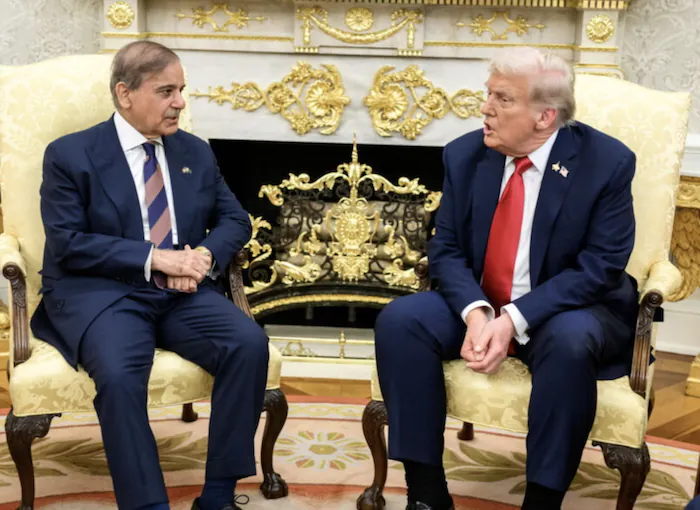
Pakistan will struggle to reassure deep Iranian doubts about the credibility of US diplomacy in negotiating a ceasefire.
After three-and-a-half weeks of war between Iran and the United States as well as Israel, both sides rejected peace plans proposed by the other. The US plan offered by Special Envoy Steve Witkoff and Vice President JD Vance on March 25 demanded that Iran shutter its nuclear program, end ballistic missile production, and open the Strait of Hormuz in return for discussing the potential reduction of sanctions. Pakistan delivered this plan to its Iranian counterparts.
Iran not only rebuked the US plan but also offered a counter plan, which demanded an end to acts of aggression, payment of war damages, an end to strikes on its proxy groups across the region, and recognition of Iranian sovereignty over the Strait of Hormuz.
During these diplomatic talks, the United States sent 2,000 paratroopers from the 82nd Airborne Division and 2,500 Marines aboard several Navy ships to the region. The deployment has fueled speculation that the United States will attack and seize Kharg Island, which is vital to Iran’s oil production and distribution. On March 13, the United States bombed the Persian Gulf island, hitting its military defenses, but leaving the energy infrastructure intact.
Since March 2025, Iran has engaged in two significant diplomatic processes with the United States, with each abruptly ending due to US-Israeli military actions. Accordingly, Tehran no doubt heavily distrusts direct negotiations with the United States and, by extension, the Gulf states that host US military infrastructure.
In this crisis, Iran’s neighbor, Pakistan, has emerged as a potential mediator capable of finding common ground and ending the conflict. For Pakistan, serving as a mediator within this complex environment poses a substantial short-term challenge: Islamabad must contend with Iran’s diminished confidence in the credibility and durability of any proposed ceasefire.
Pakistan Is Under Pressure from Within
Pakistan is contending with serious domestic and border security pressures of the Tehreek‑e‑Taliban Pakistan (TTP) terrorism, cross‑border tensions with Afghanistan, and the persistence of separatist violence in the province of Balochistan. Since 2021, these dynamics have intensified, producing a multidimensional crisis that blends domestic fragility with regional geopolitical strain.
Read the complete article here.
This is another in a series of updates on international mediation developments by Mediate.com News Editor, Keith Seat.The E.U.’s Office for Harmonization in the Internal Market (OHIM) offers mediation for...
By Keith SeatClarence Cramer discusses teaching negotiation skills to people before they really need to use them, such as when they get married as opposed to when they are filing for divorce.
By Clarence CramerIn book after book that I read about mediation, there is so much attention paid to the “environment” in which the mediation takes place. I myself, in mediations, pay a...
By Jon Linden