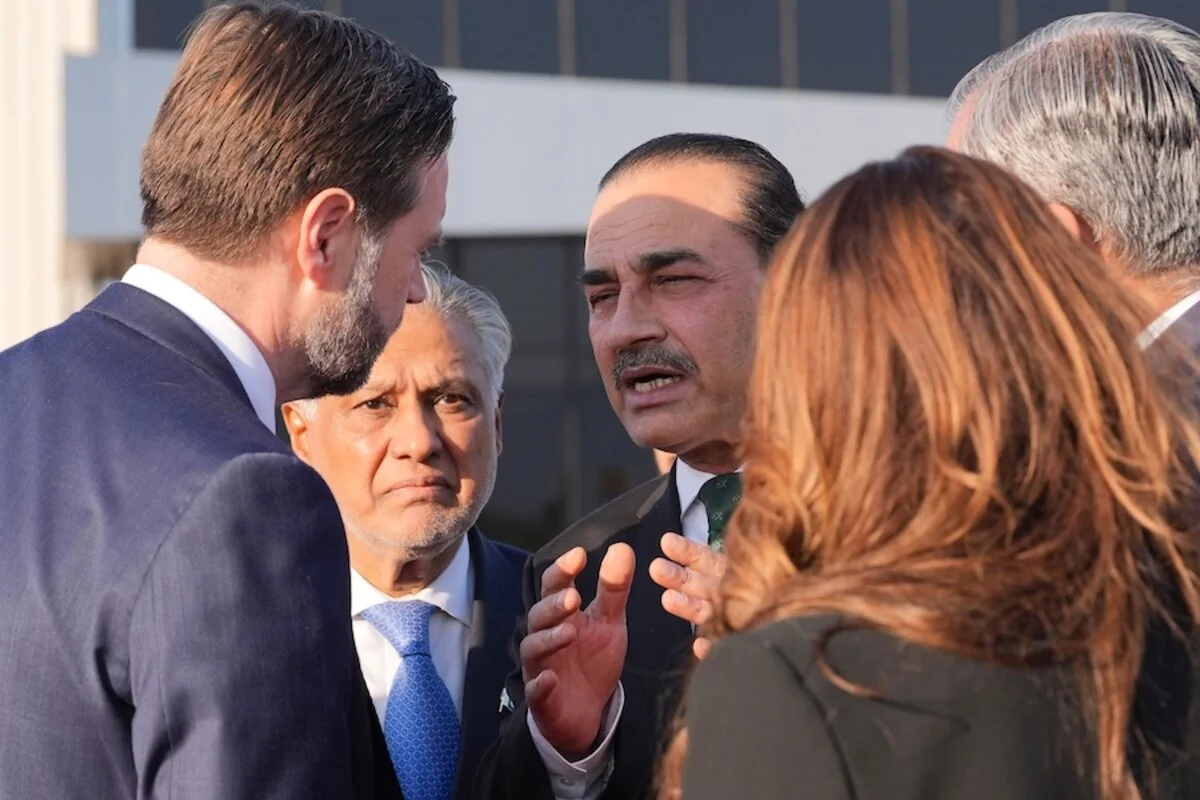
Teaming up with the small Gulf state of Qatar, Pakistan helped forge an Iran-U.S. agreement to be signed this week. Both Muslim nations worked to build trust and brought cultural nuance to creating a roadmap out of the conflict.
It’s been more than 100 days since the United States and Israel launched their first wave of attacks against Iran. With Iran and the U.S. now agreeing to sign a memorandum of understanding on Friday, it will likely be another 60 days before a conclusive end to the war is in sight.
Given the thorny issues between the two countries – especially the still-unsettled matter of Iran’s nuclear enrichment program – finalizing a peace deal in the 60-day ceasefire window is a considerable challenge.
If the envisioned ceasefire holds, and oil shipments move smoothly through the Strait of Hormuz, a longer period to work out all the details might not be a bad thing for what one analyst described as “the slow institutional work of conflict transformation.”
Such work requires building sufficient trust among those who represent opposing national interests – as well as the mediators bringing them together – so they can hammer out concessions and agreements that have staying power. This may require reconciling different understandings of peace, ranging from the absence of conflict to a more robust coexistence, if not respect, among former warring parties.
Pakistan, the key intermediary that has helped bring the U.S. and Iran together in Geneva this week, is uniquely positioned – geographically, diplomatically, and culturally – to continue supporting this process. In doing so, it’s following a path set by other middle powers in the region that have also served as interlocutors for the U.S. with Iran, such as Oman and Qatar.
“Diplomatic access, not military power,” is the key to mediation, according to Saima Afzal, a researcher at Justus Liebig University in Germany. “States with relationships across competing camps increasingly find opportunities to influence outcomes that larger powers struggle to manage directly,” she wrote last week in Asia Times.
Pakistan and the Gulf states – as well as Iran – also share an approach to conflict resolution rooted in their common cultural and Islamic heritage. It’s a view that “emphasizes reconciliation and restoration of relationships,” according to Nickolay Mladenov, an experienced coordinator for Mideast peace issues.
“In contrast to the more Western focus on swiftly identifying problems and executing interventions, the Gulf approach significantly emphasizes the slow and careful building of trust and rapport,” he wrote in a 2024 analysis for the Washington Institute.
A detailed guide to incorporating Islamic principles into peacemaking, published in 2024 by the London School of Economics, highlights the duty to hold widespread consultations and accept treaties as binding. Diversity of opinions is seen as “a blessing, rather than a negative characteristic,” it noted, and the concept of justice is “comprehensive and non-discriminatory, akin to Western notions of fairness or equity.”
Read the complete article here.
Baltimore Injury Lawyer Blog by John BrattI just reached a settlement in a case that was set for trial next week. Obviously that is great news for my client, who...
By John BrattGreg Bourne points out one early trend in the field - the emphasis that was put on increasing democracy. Now, mediation is an established profession without as much emphasis on...
By Greg BourneI'm reminded this morning of the MITSloan Management Review's article, Mastering the Art of Negotiating with Liars because today's NYT "What's Offline" column tantalizingly titled "Analyzing Failure Beforehand" mentions it and because it's...
By Victoria Pynchon