There’s a bird feeder in Dartmouth that has cost the municipality tens of thousands of dollars.
There’s a bird feeder in Dartmouth that has cost the municipality tens of thousands of dollars.
It’s a story Coun. Sam Austin (Dartmouth Centre) likes to tell when he talks about the need for a new system for dealing with disputes between neighbours.
This neighbourhood fight has involved many visits from municipal government employees, he said, including police.
“Now there are planning applications because folks want to build a bigger fence because of the dispute with the neighbour,” Austin said at a council meeting earlier this month.
“It’s been a massive resource suck.”
It was a discussion ahead of a vote to sign a contract with the United Way for a mediation pilot that would train community volunteers to respond to the many squabbles between neighbours that take up so much time for police, bylaw compliance officers, animal services, parking enforcement and others.
Austin said it’s about providing a specific service because, for example, a planning employee responding to an application for a fence can’t be a mediator, and a patrol officer responding to a call can’t get into a “deep mediation.”
He said this is about a dedicated resource that will hopefully get better results, “all for the bargain price of $100,000. This should be a no-brainer in my opinion.”
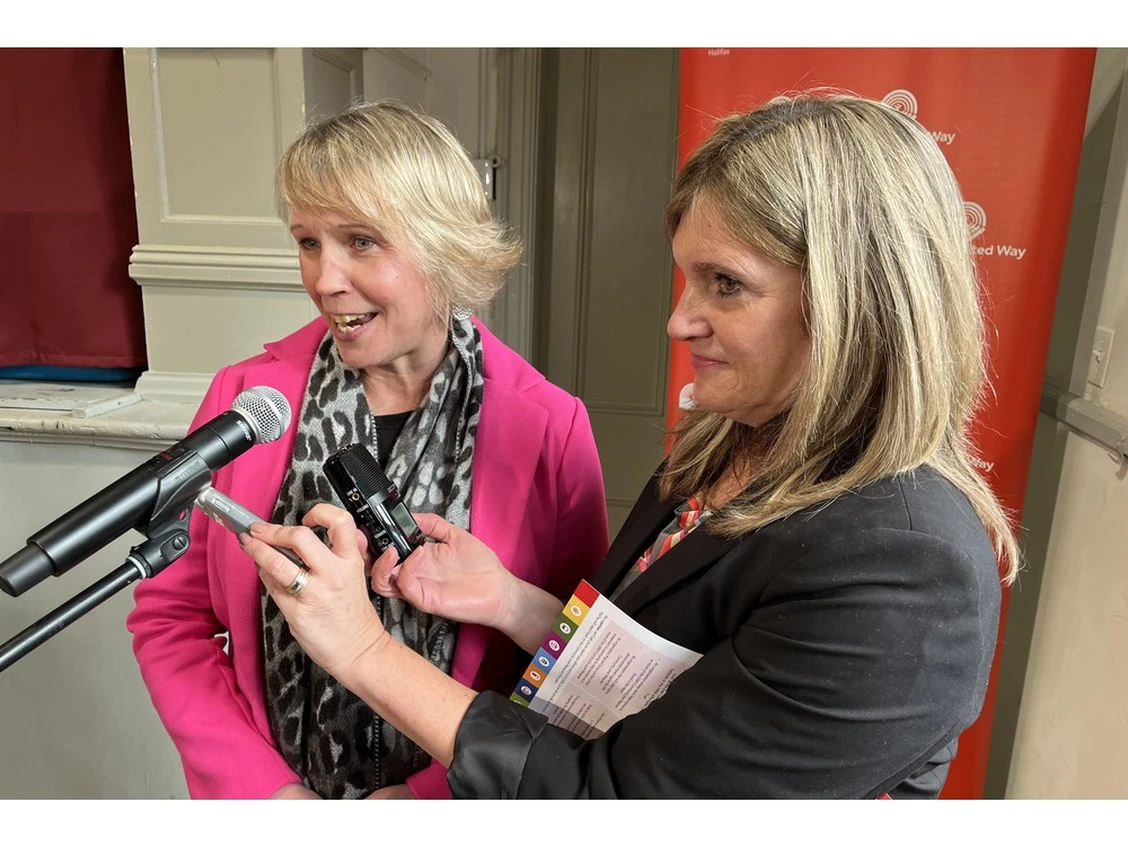
In an interview, Sue LaPierre, senior executive director for United Way, said they’re interested because of their neighbourhood programs.
“There’s evidence to show that working in neighbourhoods is an important way to tackle social issues in community,” she said.
“We also hold relationships with a number of neighbourhood hubs and it was an opportunity to invite them to get involved as well … and any time that you can help support resolution through dialogue is a really great opportunity.”
Once the ink is dry on the HRM contract, the United Way will hire a coordinator for the pilot who will look at successful mediation programs in other cities, figure out how many volunteers will be needed here and start holding recruitment information sessions.
“The pilot is focused on neighbourhood disputes. It will not involve legal matters or tenancy matters or those sorts of things,” LaPierre said. “It’s really meant to be a dispute among neighbours, so maybe your fence is on my side of the property line or your dog is coming into my yard, those sorts of things are what we’re anticipating. But we’ll see through the pilot where the need is and report back on that.”
LaPierre said the program should be up and running by mid-September. They expect to get calls directly, and also forwarded calls from police, bylaw, 311, 211, councillors, community groups and other sources.
According to the staff report, the pilot will be primarily focused on these neighbourhoods because the United Way’s established community connections and because of the mix of urban, suburban and rural sites: Spryfield, Fairview, Dartmouth North, north-end Halifax, Musquodoboit Valley, Eastern Shore and East Preston.
“Our hope is that it does provide community members with the opportunities to resolve things in a healthy way through dialogue, and to help build relationships and to really give volunteers a meaningful opportunity to contribute to something that makes a difference in their own community as well.”
The staff report listed more incidents where volunteer mediators would step in:
Deputy Mayor Tony Mancini (Dartmouth East – Burnside) said he could easily provide a dozen scenarios where neighbourhood disputes have spiralled.
One in particular, he said, required several resources to attend many times, and “it was horrible for the whole neighbourhood because they were taking sides.”
Coun. Patty Cuttell (Spryfield – Sambro Loop) said perhaps it’s not the resources that are the issue, but the way things are being approached.
“There’s no saying that by throwing something else at this, another resource at this, that the outcome is going to be any different,” she said, adding that maybe they should look at the resources they already have and use them in a different way.
Coun. Shawn Cleary (Halifax West Armdale) said he’s been dealing with two neighbours who haven’t been getting along.
“They’ve had animal services, parking enforcement, compliance officers and HRP on multiple occasions visiting the houses. I think we’re up to 12 or 13 visits now,” Cleary said.
“I’m hoping that these types of situations can be mediated in a way that’s more productive … because we don’t have a way to really massage relationships between neighbours.
“If we can get HRP (Halifax Regional Police), compliance, parking and animal services not to show up there anymore, but these people can work out something with mediation, we just saved ourselves a bunch of resources that we were spending already on literally two families.”
He added that it might not pay off, but that’s why they do pilots – to see if it will work.
Read the complete article here.
Este articulo fue previamente publicado por EL ACUERDO, la revista del Equipo IMCA?. Gracias a los editores del Equipo IMCA por prestarnos el permiso de publicar este articulo.La Mediación aparece...
By Juan Carlos González GarciaADR Prof Blog by Andrea Schneider, Michael Moffitt, Sarah Cole,Art Hinshaw, Jill Gross, Paul Kirgis, and Cynthia Alkon. Just as I am beginning to settle back into my bourgeois American...
By Paul KirgisAs we mediators struggle to find the right words to define our personal styles of mediation, descriptors such as transformative, facilitative, and problem-solving are appearing more and more. Baruch Bush...
By Cris Currie