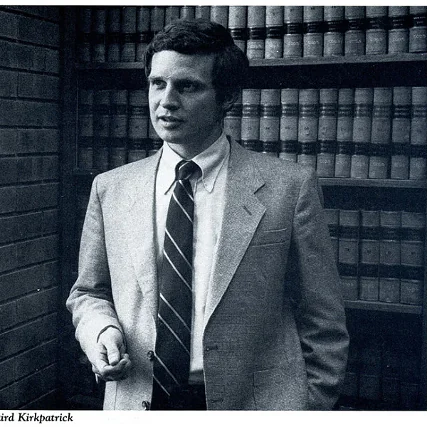
My personal introduction to mediation was in 1981 during my second year of law school. I had the opportunity to take an Alternative Dispute Resolution (ADR) seminar with the highly regarded law professor Laird Kirkpatrick at the University of Oregon School of Law in Eugene. One thing that became clear to me during that seminar was that “mediation” and “arbitration,” while both similar in being “alternative” to litigation, were vastly different.
Specifically, in the case of ARBITRATION, things are much like litigation, just a bit more efficient and affordable, and with extremely limited bases for appeal. Arbitrations are also often “confidential,” in contrast to “public” litigation.
Most importantly, in arbitration, THE ARBITRATOR OR ARBITRATORS HAVE COMPLETE DECISION MAKING POWER (subject to very limited bases for appeal).
In stark contrast, in mediation, THE MEDIATOR (OR MEDIATORS) HAVE ABSOLUTELY NO DECISION MAKING POWER. All of the decision-making power in mediation remains at all times with the parties, commonly called “participants.” Because there is no single “decision-maker” in mediation, participants are assisted by one or more mediators to work together to find mutually acceptable, if not optimizing, solutions. The goal is to find a set of mutually acceptable solutions sufficient to at least “call off the war,” if not optimizing things for the future.
Back in law school, I followed my “ADR Seminar” with two externships, one regarding environment and public policy mediation at The Mediation Institute in Seattle under the leadership of Gerry Cormack, and one at the Clackamas County, Oregon “Conciliation Court,” under the guidance and leadership of Stan Cohen and Nolan Jones.
I was struck at just how different confidential mediation discussions were compared to the typical legal battle mode. In the case of the Clackamas Conciliation Court and family mediation, the discussions appropriately focus on the best interests of the children, for which a great deal of empowering information can be developed and confidentially shared in mediation. There is also commonly an ongoing family relationship, fully desired or not, between the parents that benefits from capable facilitation and support.
As a side note, the “jargon” of 1980s “custody and visitation mediation” has now fully changed. Nearly every state and many foreign countries now have specific requirements for what constitutes a court acceptable “Parenting Plan.” Rather than dividing parenting rights by gross, if not insulting, notions of “custody and visitation,” courts now ask parties (participants) to provide details about their general residential schedule and its best adjustments, vacations, holidays, birthdays, specific issue decision-making (e.g., school, medical, sports, etc.), means of resolving disputes, proposing modifications and more.
In contrast to these very personal, private and often emotional family mediations was the environmental and public policy mediation services offered by the Institute for Environmental Mediation at the University of Washington, supported by the Ford Foundation, directed by Jerry Cormack. Among the issues that the Institute was working on during my externship were water and air pollution, watershed management, old growth preservation and endangered species.

Gerry Cormack
It dawned on me one day that this “mediation thing” was rather cool in that, as a safe discussion model, it could clearly apply to both intimate and emotional family matters as well as broad social and policy issues. I was also taken with how the seemingly goal of mediation in both cases was not only finding “barely sufficient” solutions, but, rather, to in fact search for “optimized overall satisfaction” for both and all participants.
I thus marveled at this new confidential, safe and optimizing discussion model called “mediation.” It was certainly far different and seemingly far more constructive than stressful, costly and time-consulting litigation. It almost seemed to me like having some measure of mediation discussions, or at least that opportunity to have mediation discussions, might ultimately be a powerful prerequisite for court litigation. The fact that these discussions can and do now commonly take place efficiently and effectively “online,” now has this concept of required or encouraged mediation more reasonable than ever.
What also impacted me as much as these family and environment externships was an additional understanding that, even without the development of mediation and arbitration, nearly 97% of disputes filed in court “settle.” Unfortunately, I also learned that more than half of these settlements take place “on the courthouse steps” (under the duress of an impending trial after all of the delay, stress and cost) or are taken by default, where one party never meaningfully participates.
The other thing that I recognized is that “courthouse step settlements” tended to be “barely sufficient settlements,” as opposed to “most capable and optimizing settlements.” My early conclusion was thus that “we” (as in everyone) can do so much better than continuing to exclusively rely on our traditional polarized “litigation model,” where every case is stylized as a “a righteous battle,” if not a full scale war, rather than as an opportunity to most capably solve a set of challenging problems that very much need to be solved.
My first early conclusion was that there is no shortage of opportunity to improve upon the prevailing litigation system. For starters, does every dispute need to be filed with a court? Might community mediation or private mediation help pre-empt the stress, cost and delay of litigation? Further, if there is a court or administrative filing, doesn’t it make sense to encourage settlement discussions to begin early, rather than wait until the days immediately prior to a scheduled trial, after so much delay, cost and stress.
Still further, fast forwarding to the current time, doesn’t it not only make sense to encourage and assist disputants to settle things early, for less money and with less stress, but to also offer everyone robust options to do all of this “online.”
In fact, I suggest that every mediation case is already an “online case.” People now learn about mediation online. They select mediators online. They schedule and submit documents online. And, even if folks choose to physically meet (as opposed to exclusively using Zoom or another rich media platform), the progress of any face-to-face meeting(s) will surely also be exchanged and refined through additional online correspondence and drafting. Digital features like “track changes” and “doc-u-sign” have made online resolutions commonplace, even for that hardest throwing attorneys.
Who in the world is David James? The answer is that David, indirectly, had an absolutely key role in my deciding to become a mediator in Eugene. David was the one attorney mediating divorce cases in Eugene in 1982. Actually, David was co-mediating cases with a well-regarded Eugene psychologist, Polly Jamison. When David decided to move to Alaska, Polly gave me a call to see if I might have interest in replacing David and our offering co-mediation services. A light bulb went off in my brain. I soon recognized this as a great opportunity for me to leave the small Eugene law firm that I worked for and commit myself to mediation.
My initial firm, Neal & Krambs, had the public defender contract for the City of Eugene. As low man on the totem pole, I had the daily assignment of going down to the Lane County Jail to handle in-custody arraignments, often representing 10 or more defendants in a single day. I soon felt like a “cog in a machine.” It was clear to me that just about any reasonably capable young attorney could do what I was doing. It wasn’t satisfying and this, I know, is why I jumped at Polly’s offer to be her needed male attorney co-mediator.
Polly and I did about a dozen mediations together. It was a great experience, first off to see the benefits of co-mediation from a “gender balance” perspective, and second to experience how comfortable Polly was with the participants’ sometimes rather raw or extreme emotions. This opportunity to experience Polly’s comfort and confidence with the emotional side of divorce, and my ability to debrief and consult with her, ultimately led me to also offer solo mediation services. While notably different from a gender-balanced co-mediation model in that there is an intrinsic gender imbalance with only 3 people in a solo mediator mediation, I also quickly recognized the benefits of not having to schedule or pay a second very busy mediator. Participants also appreciated the lower cost and increased efficiency.
I also soon came to be willing, as the only venturesome mediator in town, prepared or not, to mediate other types of cases. For example, I mediated a number of situations with various departments of Lane Community College and at the University of Oregon. I also came to mediate business partnership formations and dissolutions, land use matters and probate (trust and estate) issues.
Eventually, I also came to teach Mediation at the University of Oregon School of Law and at the Straus Institute for Dispute Resolution at Pepperdine Law School in Malibu, California. In fact, my “biggest cases,” one a $242 million dollar estate where the mediation had 57 lawyers involved, and the other for a very famous rock star family, were both in Los Angeles. When I inquired about why the parties were comfortable having an attorney from Eugene, Oregon (who also taught at Pepperdine), I was told that “the attorneys did not sufficiently trust any of the local mediators and there was a sense that I had not yet been corrupted.” I rather suddenly recognized that there were some benefits to not necessarily being “local,” and this has become even more the case with the elevated use of online mediation.
With the support of Laird Kirpatrick and Jane Gordon at the University of Oregon Law School, as well as Ray Lowe at the U of O Psychology Department, the Lane County (Eugene) Conciliation Court and Lane County Community Mediation Services took hold between 1983-85. Rather remarkably, there came to be a Lane County Mediation Association which, after a year, merged with similar groups from Portland and Salem Oregon to form the Oregon Mediation Association in 1985. The OMA is now in our 50th year. The OMA website is at ormediation.org.
It is a bit challenging to take folks back 40 years to 1985. Let’s start by noting that there was no Internet. There was no “online.” To figure out how to draft capable Articles of Incorporation for a new Oregon Mediation Association, I journeyed to the Lane Country Law Library and University of Oregon Law Library. I was able to photocopy a few pages, but that was it. I am guessing that, all told, it took me two days to finish the OMA Articles of Incorporation. Today, with ChatGPT and other AI support, I am guessing I could do the same work, at a higher level, in an hour. Here are the Purposes of OMA from the Articles of Incorporation:


I met Kathleen in 1985 as she as finishing up her undergraduate degree at the University of Oregon. Kathleen had a strong interest in family mediation and wondered what the best path for her development was. It turns out that Kathleen went on to not only finish her undergraduate degree, but to also complete her Masters and Ph.D. under the supervision of Ray Lowe at the University of Oregon Department of Psychology.
Kathleen was also my first intern and, ultimately, my first associate. Ultimately, Kathleen became one of the lead mediators with the Court’s Lane County Family Mediation Service. Kathleen would get the absolutely most challenging public sector cases, often with abuse, alcohol, drugs, crime, you name it. She was a highly effective mediator, always acting in the best interests of the children.
In fact, Kathleen came to write what is still considered one of the best articles ever written entitled “Psychological and Emotional Aspects of Divorce” and available here: https://mediate.com/psychological-and-emotional-aspects-of-divorce. This article begins: “This article summarizes many of the common psychological and emotional effects divorce has on men, women and children. The divorce rate in the United States is the highest in the world. Over fifty percent of marriages end in divorce. Welcome to the majority.”
We used to say that Kathleen mediated “with an iron fist inside of a velvet glove. Kathleen did all she could to help all parents to “do right by their kids.” Most unfortunately, and rather compelling proof that “the good die young.” Kathleen O’Connell Corcoran, Ph.D., died at the age of 50 of cancer on September 19, 1998.
There was one other remarkable facet to Kathleen, she worked at a progressive print shop in Eugene. When I met Kathleen, the print shop where she worked was just getting into something new called “Desk Top Publishing.” We did not have colors yet, but, rather suddenly, with the right software on my new PC, I could now turn out a rather professional looking newsletter for the newly formed Oregon Mediation Association (OMA).
Perfecting the OMA newsletter and also putting together a blow away 1986 OMA Conference Program not only motivated OMA’s success, but were also the perfect exhibits for me to share with the Academy of Family Mediators, a recently formed national family mediation association that just happened to have an opening for their Executive Director position.

There is, in fact, no doubt in my mind that my ability to show off the OMA Desk Top Published Newsletter and OMA Desk Top Published Conference Program is what got me the Academy of Family Mediators (AFM) Executive Director job. In fact, this is a good example of how being on the leading edge of relevant technology is just about always a good choice in the job market.
The change-over at AFM was dramatized for me when I attended my first 1987 AFM Conference in New York at the Roosevelt Hotel. The Conference Program for that event, coordinated and produced by the volunteer AFM Conference Committee, was done on a mimeograph machine. Those of us who can remember such things can surely imagine the strong chemicals put off by a few hundred mimeographed conference programs. I think they did permanent damage to my brain.
I do want to be sure to honor the founding President of AFM, John Haynes. In terms of teaching me about effective mediation strategies and techniques, John was my first “guru.”

John Haynes, Founding President of AFM
Be sure to check out John’s series on Metaphors in Mediation at Mediate.com.

I was admitted to the Florida Bar in 2005. I started handling family law matters in 2007. At the time, I was an associate handling commercial matters when the family...
By Christen RitcheyMediation is a process of conflict resolution that involves a neutral party and two conflicting parties. This neutral party is a mediator whose function is to settle the differences between...
By Jakob Vinther, Thomas Todd Reynolds- Full Info and Register Here - The Rising Tides Conference is your opportunity to elevate your practice, connect with leaders in the field, and gain cutting-edge tools to navigate today’s mediation...
By Clare Fowler, Colin Rule, Bridget McCormack, Susan Guthrie, Tracey Frisch, Stephen Kotev, Chuck Doran, Bob Bordone