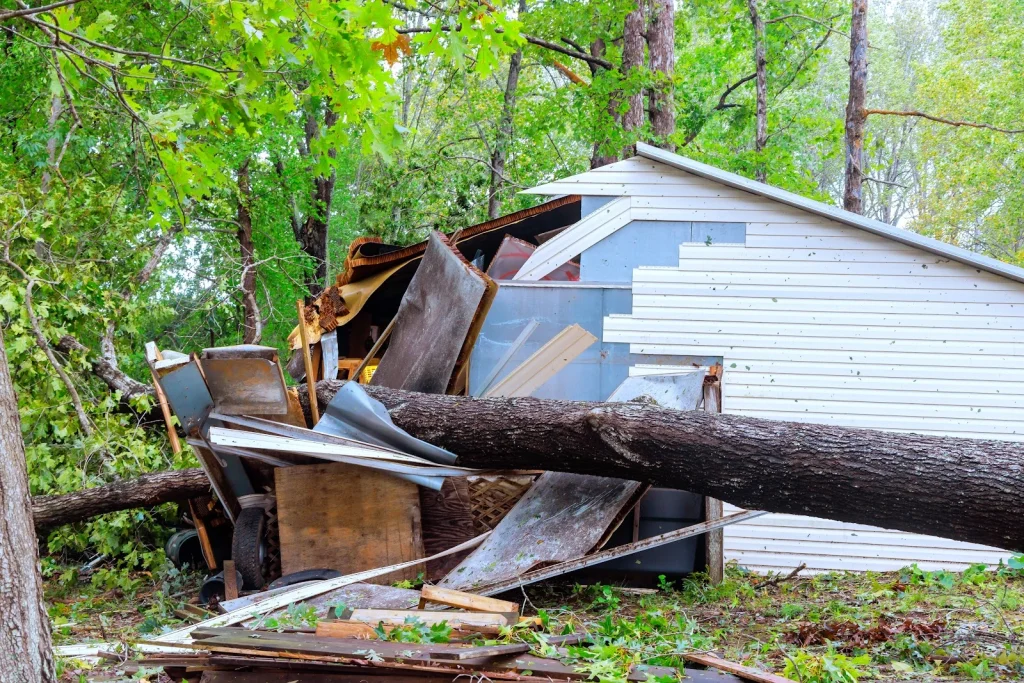
With hurricane season starting in Florida where I am, I thought it might be germane to talk about First-party property insurance disputes. First-party property insurance disputes present a uniquely volatile environment for alternative dispute resolution. Unlike third-party liability claims, where the combatants are often strangers, a first-party claim pits a policyholder directly against the company they paid to protect them. By the time these cases reach the mediation table, the atmosphere is heavily saturated with feelings of institutional betrayal, profound financial anxiety, and entrenched adversarial posturing.
To successfully mediate these claims, a neutral must move beyond simple shuttle diplomacy. The mediator must act as an expert translator of dense policy language, a grounded agent of reality, and an emotional shock absorber for policyholders whose homes or businesses hang in the balance.
Here are the critical strategies for dismantling impasses and driving settlements in first-party property mediations.
The psychological underpinnings of a first-party property dispute are distinct. For the policyholder, the loss of a property—whether through fire, hurricane, or catastrophic water damage—is an intimate trauma. When the subsequent claim is delayed, underpaid, or denied, the policyholder frequently views the insurer’s actions as malicious. This feeling of betrayal is uniquely amplified in the current Florida landscape. Recent legislative reforms, such as the total ban on Assignment of Benefits (AOBs) and the elimination of “one-way attorney fees,” prevent contractors from stepping in to handle the claim. Consequently, the displaced homeowner now bears the entire psychological, administrative, and financial burden of the dispute directly.
For the insurance carrier, however, the claim is a strict matter of contractual interpretation and actuarial math. The carrier is evaluating the file through the lens of policy exclusions, depreciation schedules, and expert engineering reports.
The mediator’s first task is to bridge this conceptual divide. This requires normalizing the policyholder’s emotional distress while simultaneously shifting their focus away from the perceived “betrayal” and toward the objective economic realities of their policy.
In many property mediations, the evidentiary battle begins long before the storm hits or the pipe bursts. It begins with the pre-loss underwriting documents—specifically the 4-Point Inspection and the Wind Mitigation Report. These documents frequently become the evidentiary anchor for both sides during negotiations.
The 4-Point Inspection: Required by most insurers in Florida for homes over 15 to 20 years old, a 4-point inspection is a focused evaluation performed by a licensed inspector. It assesses the current condition, age, and remaining useful life of four critical systems: Roofing, Electrical, Plumbing, and HVAC.
The Wind Mitigation Report: This report details a home’s structural ability to withstand hurricane-force winds. An inspector evaluates the roof’s geometry, the roof-to-wall attachments (e.g., hurricane clips, single wraps, or double wraps), the roof deck attachment (nail spacing), and opening protections (impact windows or shutters). Homeowners submit these to obtain significant premium discounts.
While catastrophic hurricanes dominate the headlines, a massive percentage of day-to-day first-party property mediations revolve around plumbing failures, roof leaks, and the fundamental policy divide between a “sudden and accidental” loss and “normal wear and tear.”
Standard all-risk policies are designed to cover sudden, unforeseen events. They explicitly exclude damage resulting from long-term degradation, deferred maintenance, age, or repeated water seepage over time. This creates a highly technical battleground over the timeline and nature of the failure:
The mediator must deconstruct this dispute by navigating the complex doctrine of “ensuing loss.” Even if the exact source of the damage (e.g., a rusted cast-iron pipe) is excluded as wear and tear, the resulting damage (e.g., the ruined hardwood floors) may still be covered if the water escaped suddenly.
Instead of allowing the parties to argue emotionally about “how well the house was maintained,” the mediator must aggressively reality-test the forensic plumbing or metallurgical reports. The mediator forces both sides to weigh the risks of taking highly technical, often ambiguous causation evidence to a jury that may struggle to distinguish between a “gradual leak” and a “sudden rupture.”
When handling storm claims, Florida mediations often center heavily on roof damage. Due to the intensity of Florida’s hurricane seasons, the need to fix a roof quickly is paramount to prevent severe ensuing water damage and toxic mold. However, the claims process frequently delays this vital repair, putting homeowners in a desperate position. Under current Florida law, failing to mitigate damage or waiting more than 60 to 90 days to document and file a claim gives the carrier room to argue that the damage is either pre-existing or severely exacerbated by the homeowner’s inaction.
A crucial friction point in these mediations is the life expectancy of the roof. In Florida, architectural asphalt shingles typically last 15 to 20 years, while concrete or clay tile and metal roofs can endure 30 to 50 years. However, the punishing combination of UV radiation, salt air, and severe weather accelerates degradation. Historically, insurers utilized a strict “15-year rule,” outright refusing to write or renew policies on shingle roofs older than 15 years. This has been altered by Florida Statute § 627.7011, which prohibits insurers from dropping coverage solely based on roof age if a certified inspection verifies the roof has at least 5 years of useful life remaining.
Even with coverage in place, the legal and policy landscape in Florida strictly limits roof recoveries, forcing the mediator to ground the homeowner’s expectations in mathematical reality:
Moving from roofs to the foundation, one of the most fiercely contested areas in catastrophic loss mediation involves the dividing line between covered and excluded perils. Standard property policies typically cover wind damage but explicitly exclude damage caused by flooding, rising water, or storm surge (which always requires a separate National Flood Insurance Program [NFIP] or private flood policy).
In the aftermath of hurricanes, this creates a high-stakes evidentiary battleground. The conflict frequently manifests in “slab” or “waterline” cases:
The mediator must deconstruct this binary conflict. Instead of letting parties argue endlessly over unprovable hypotheticals, the mediator shifts the focus to the objective evidence: forensic meteorology, storm timelines, and engineering reports.
The wind versus flood debate is further complicated by the most formidable barrier to settlement in catastrophic loss mediations: the Anti-Concurrent Causation (ACC) clause.
Historically, many states adhered to the “Concurrent Causation Doctrine” (or “Efficient Proximate Cause”). Under these older standards, if a covered peril (like wind) and an excluded peril (like storm surge) combined to destroy a property, the insurer generally had to pay out if the covered peril was the primary or initial trigger. To stop this, insurers rewrote their contracts.
When a property is destroyed by a combination of events, the ACC clause allows the insurer to deny the entire claim if an excluded peril contributed to the loss in any sequence.
In a modern homeowners or commercial property policy, an ACC clause typically reads like this:
“We do not insure for loss caused directly or indirectly by any of the following [Excluded Perils]. Such loss is excluded regardless of any other cause or event contributing concurrently or in any sequence to the loss.”
This creates a massive bottleneck at the negotiating table:
To successfully mediate these claims, a neutral must understand exactly how courts are treating these clauses:
The Baseline (Strict Enforceability): When an ACC clause is clearly and unambiguously written, courts rigorously enforce them. If an insurer’s expert can definitively prove that an excluded peril combined with a covered peril to cause the same specific damage, the ACC clause legally permits the insurer to deny that portion of the claim.
If the mediation fails, the case heads to a jury trial—a scenario that carries massive, unpredictable risks for both sides. The mediator must forcefully remind the parties of how a jury actually reacts to property damage disputes.
The Threat to the Insurer: Juries are composed of everyday citizens, many of whom are homeowners dealing with rising insurance premiums and a baseline skepticism of large corporations. In a courtroom, a jury instinctively defaults to profound sympathy for a displaced policyholder. For an insurer, presenting dense exclusionary language (like an ACC clause) to a jury is perilous. Juries frequently experience “eyes glaze over” syndrome during highly technical forensic engineering testimony. Worse, a jury might interpret the carrier’s strict reliance on a technical exclusion as aggressive, bad-faith corporate bullying, radically inflating the risk of a runaway verdict.
The Threat to the Policyholder: Conversely, the plaintiff’s attorney must understand that jury sympathy is highly fragile. If the defense successfully demonstrates that the homeowner or their public adjuster vastly exaggerated the repair estimate, or tried to claim obvious pre-existing wear-and-tear as sudden storm damage, the jury’s sympathy can rapidly pivot to resentment against a plaintiff perceived to be committing insurance fraud. Furthermore, recent Florida appellate decisions have strictly ruled that policyholders cannot introduce “claims handling” evidence (i.e., complaining that the carrier was too slow or incompetent) during a breach of contract trial, limiting the jury’s ability to punish the insurer purely for delays.
By forcing both sides to quantify the severe risk of these unpredictable jury reactions, the mediator shrinks the negotiation gap from a chasm of “all or nothing” into a rational, mathematical Zone of Possible Agreement (ZOPA).
First-party property claims rarely hinge on eyewitness testimony; they are battles of competing experts. The policyholder brings a public adjuster (PA) forecasting a total rebuild, while the carrier brings a forensic engineer claiming the damage is isolated and repairable.
The Economics of Recovery and PA Tactics
In states like Florida, public adjusters are licensed professionals hired by the homeowner to document the claim and negotiate with the insurer. A core PA tactic is to build an exhaustive, maximalist repair estimate to counter the insurer’s typically lowball appraisal. However, PAs generally charge a contingency fee of 10% to 20% of the final insurance payout.
Because Florida recently eliminated the right to recover attorney fees from the insurer, a homeowner settling at mediation must now pay both their attorney’s fee and their public adjuster’s percentage out of the final settlement check. The mediator must acutely manage this “recovery math.” If a PA’s inflated estimate creates unrealistic expectations for the homeowner, the mediator must carefully strip the emotional rhetoric from the expert reports and isolate the precise variables causing the financial gap:
By isolating these variables, the mediator can utilize the “salami tactic”—slicing the overwhelming, multi-million-dollar claim into small, manageable pieces to be resolved one by one.
A mediation is entirely useless if the people with the power to end the dispute aren’t present. The architecture of a first-party property mediation is inherently crowded because the dispute relies heavily on technical, legal, and financial expertise. During the pre-mediation conference, the mediator must firmly establish who will be attending and verify their authority to settle.
For a first-party property mediation to be effective, the following participants must be integrated into the process:
Once the right people are in the room (or logged into the virtual platform), the mediator must carefully design the structure of the day.
Historically, mediations began with a formalized joint session where both sides delivered opening statements. In modern first-party property disputes, this is frequently a recipe for disaster. When an insurance defense attorney delivers a rigid, positional narrative explaining why a family’s destroyed home is not covered, it immediately triggers an emotional “Amygdala Hijack” in the homeowner, making rational negotiation impossible.
Instead, highly effective mediators often skip the formal joint opening and utilize “appreciative inquiry” and open-ended questions in private caucuses to set a constructive tone.
The private caucus is the highly confidential crucible in which the vast majority of modern settlements are forged. In these separate rooms, the mediator engages in shuttle diplomacy:
When negotiations stall strictly over technical details—such as the cost per square foot of drywall or the necessity of replacing a roof truss—the mediator may employ a strategic variation: the expert breakout. With the consent of the attorneys, the mediator places the public adjuster and the carrier’s desk adjuster (or independent engineer) into a separate room to hash out the line items. Removing the lawyers and the emotional homeowner from this specific micro-negotiation allows the technical professionals to find a compromised “agreed scope,” which the attorneys can then use to finalize the global dollar amount.
In first-party property cases, it is incredibly common for the initial numbers to be miles apart—for instance, the policyholder demands $1.5 million for a total rebuild, while the carrier offers $50,000 for isolated repairs. Standard back-and-forth bidding at this stage is usually futile; neither side wants to bid against themselves or make a massive, unreciprocated leap.
To cure this paralysis, the mediator should introduce bracketed proposals (or “bracketing”).
A bracket is a conditional offer. Instead of asking a party for their next absolute number, the mediator asks them to commit to a conditional range. For example, the mediator will go to the plaintiff and say: “I know you are at $1.5 million. Will you agree to drop your demand to $900,000, IF I can get the insurance carrier to raise their offer from $50,000 to $400,000?”
Using brackets achieves several strategic goals during the final, most difficult hours of the mediation:
First-party property mediations are not merely financial transactions; they are high-stakes interventions that require dismantling both profound emotional grievances and complex actuarial defenses. By moving past the traditional adversarial playbook, expertly managing the crowded architecture of the room, and aggressively reality-testing evidentiary hurdles like the Anti-Concurrent Causation clause or the “wear and tear” exclusion, a skilled neutral can break the deadlock.
The ultimate goal of the process is to facilitate a psychological and strategic shift in the participants. As long as the policyholder and the insurer remain fixated on the past—arguing over who is to blame, the exact sequence of a storm, or feelings of institutional betrayal—they are staring exclusively into the “rear-view mirror” of the dispute.
A successful mediator redirects their focus through the “windshield,” forcing both sides to look at the broad horizon of resolution. By utilizing specialized techniques like bracketed proposals and translating legal vulnerability into a logical business decision, the mediator achieves a dual victory: allowing the insurance carrier to permanently close a volatile, high-risk file, and, most importantly, empowering the homeowner to finally stop litigating and begin the vital work of rebuilding.

Occasionally a Court will send over a civil case for facilitative mediation. The order arrives and names are reviewed for the purposes of conflict checks and disclosures. You may notice...
By William GilbrideWhen words come out of your mouth that you instantly regret, here are some ways to recover from your faux pas and minimize the impact of ill-chosen words. The stress and...
By Tammy LenskiTable of Contents 1 Summary 2.1 Investigation and Decision 2.2 Mediation 3 Alternative Dispute Resolution (ADR) 3.1 Dispute Resolution Processes 4 The Equality Tribunal’s Mediation Service 5 Approach 5.1 Guidelines...
By Ruairí Gogan