Also See: “Mediation Past, Present & Future – Our Evolution from Physical to Digital Mediation” with Jim Melamed and “The Future of Family Mediation: The Rise of AI” with Colin Rule.
Yesterday, I had the opportunity to present the “Present” segment of APFM’s Mediation Past, Present & Future keynote alongside Jim Melamed, who explored the foundations of mediation, and Colin Rule, who provided a glimpse into where we’re headed.
My focus was on the rapid transformation of family mediation in recent years, particularly how technology—and now AI—has reshaped both the practice and the expectations of clients and practitioners alike.
The full set of slides from this presentation is
available by clicking any slide or here

Family mediation has come a long way. The field has grown, and the mediators entering it bring diverse backgrounds and skill sets. Technology has not just changed how we conduct mediations, but how we connect with clients, structure our practices, and engage in ongoing learning. The expectations of clients have shifted as well. They now assume the process will be efficient, cost-effective, and tailored to their unique needs.
More than ever, mediation is an interdisciplinary effort. The ability to bring in financial, mental health, and legal professionals with ease—especially through digital platforms—has made mediation a more comprehensive and collaborative process.

We’ve already proven that mediators can adapt to new technology. The shift to video conferencing was a major hurdle, yet now it’s an essential tool in most practices. AI is the next step—but what makes AI different is that it isn’t just changing how we communicate; it’s influencing how we think about and approach dispute resolution.
AI can support mediators in managing cases more efficiently, generating creative options, and expanding access to legal and financial insights. However, it’s important to recognize that AI is a tool, not a replacement for human judgment. Used well, it can enhance decision-making and streamline processes, but it should never become the decision-maker itself.
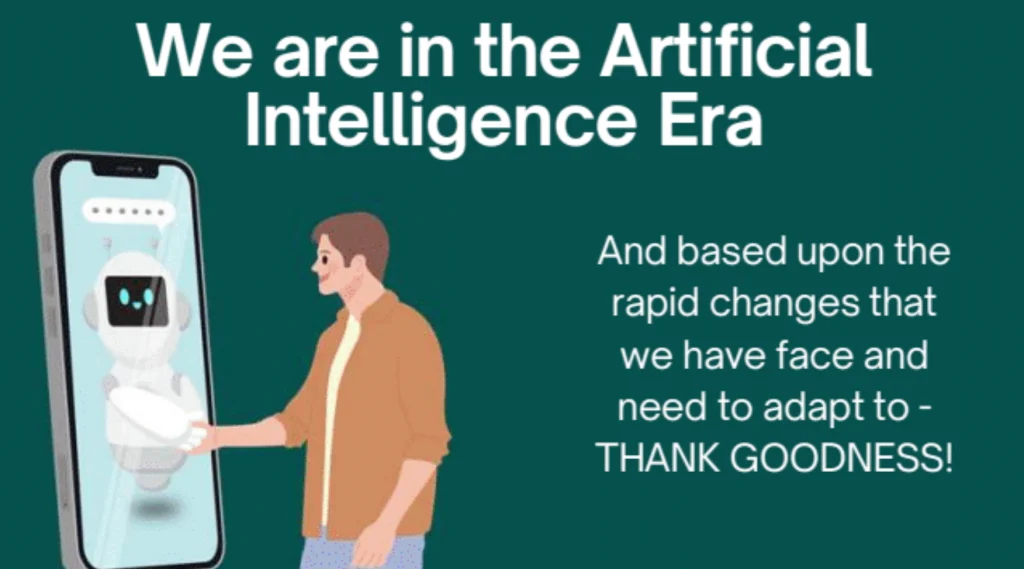
One of the most powerful ways AI can be used in mediation is as an idea generator. Asking AI for a single “right” answer often leads to a response that favors one side over the other. But when we ask AI for multiple possible solutions, it creates space for dialogue and negotiation—exactly what mediation is all about.
Adopting AI isn’t just about knowing what’s available—it’s about using it wisely. The ASPEN Protocol offers a structured way to think about AI in mediation:

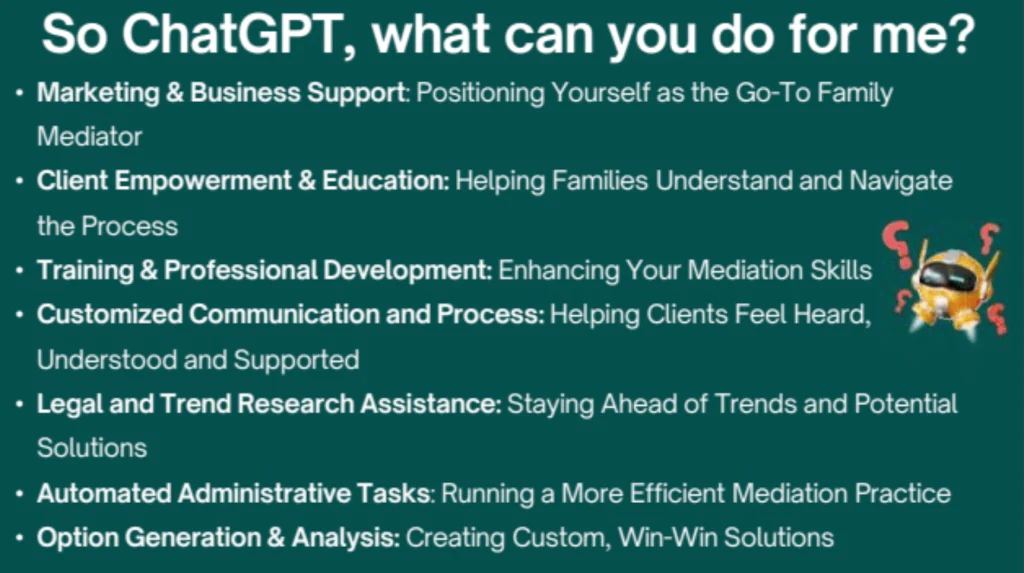
AI is not a passing trend—it’s here, and it’s already shaping mediation. The question is not whether to use AI, but how to use it responsibly.
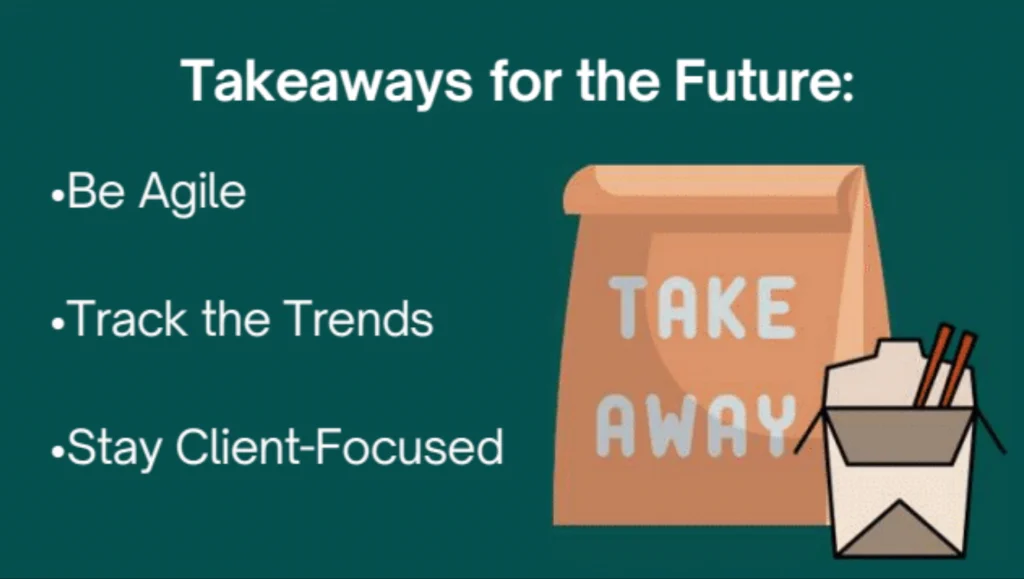
Staying adaptable will be key. Keeping up with advancements, experimenting with new tools, and maintaining the human-centered approach that makes mediation effective will ensure that technology serves mediators—rather than the other way around.
At its core, mediation is still about people, communication, and resolution. AI can enhance the process, but it’s the mediator’s ability to build rapport, understand emotions, and guide productive conversations that will always be the most valuable part of the equation.
The full set of slides from this presentation is
available by clicking any slide or here

Peacemaking is a complicated concept because peace can be defined in so many different ways. For our purposes, peacemaking is not a process of passive acceptance of mistreatment, a turning...
By Douglas NollI’ve got four business books on my reading pile for March. Here’s what I’m reading and why: Switch: How to Change Things When Change Is Hard by Chip Heath and...
By Tammy LenskiMediation and Business Consulting by Kathleen Kauth. How do you respond to conflict? It is very personal, and is based on millions of experiences that have shaped each person. Each...
By Kathleen Kauth